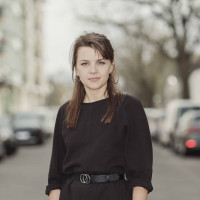

Earlier this month, Aurelija joined a panel discussion held in Aedes Metropolitan Laboratory on Democratic Design — exploring how cities can foster more inclusive and participatory planning processes.
In her presentation, Aurelija reflected that when we speak about participatory, inclusive planning processes, it’s often to pictured as a single event: a workshop, a consultation, or a survey. Yet the true challenge is not about inviting people to participate — it is in finding alignment. Therefore, what truly matters is creating a shared vision that everyone — youth, elderly residents, business owners, families, politicians — can recognise and work toward. A shared vision becomes a tool: it aligns diverse perspectives and allows a city to move forward together.
In her reflection, Aurelija highlighted how, across TSPA’s work on three continents, we observed, that the role of the urban planner is shifting.
“We are no longer the sole authors of plans, producing zoning regulations or master plans. Increasingly, we are facilitators of a collective visioning. Our task becomes more about designing processes, to create a common language, and to make sure the outcome does not disappear into a drawer — but actually guides action.
Aurelija illustrated this through the UP2030, an ambitious project, where TSPA led the co-design of visions and the adaptive pathways process to support climate resilience, carbon neutrality and a just transition goals across ten pilot neighbourhoods. Drawing on examples from Belfast, Granollers, and Thessaloniki, she talked about the importance of shared visions - and that it starts by building shared vocabulary, meeting people on their own terms and developing a sustained engagement beyond a single event.
Find out more about the discussion on the Aedes website via link here.